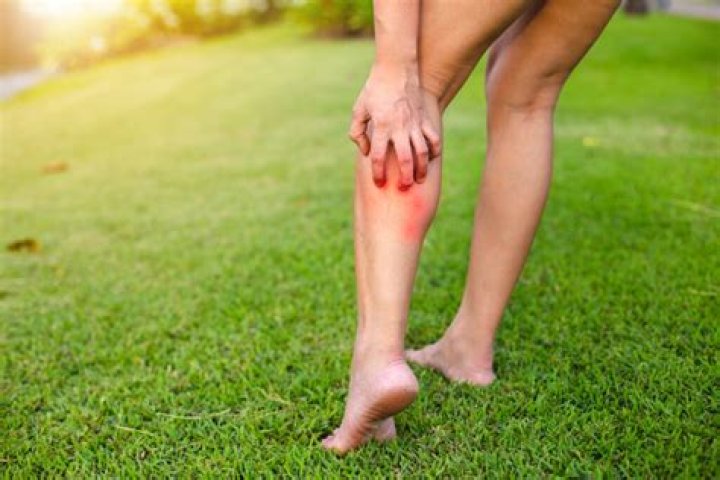
The popliteal fossa is a diamond-shaped depression located posterior to the knee joint. … Several muscles of the thigh and leg form the boundaries of the popliteal fossa. They include the semimembranosus, semitendinosus, biceps femoris, gastrocnemius and popliteus muscles.
What are the contents of popliteal fossa?
- tibial nerve.
- common fibular nerve (also known as the common peroneal nerve)
- popliteal vein.
- popliteal artery, a continuation of the femoral artery.
- small saphenous vein (termination)
- Popliteal lymph nodes and vessels.
What can you palpate in the popliteal fossa?
The tibial vein and the tibial artery are located medial to it. Nerve and artery can be palpated as follows. The patient is in the supine position, the knee bent to a right angle and the foot flat on the couch.
What arteries are located in the popliteal fossa?
Popliteal arterySourcefemoral arteryBranchesanterior tibial, posterior tibial artery, sural, superior genicular (medial, lateral), middle genicular, inferior genicular (medial, lateral)Veinpopliteal veinIdentifiersIs the femoral artery in the popliteal fossa?
SourceFemoral arterySuppliesKnee joint, leg muscles
What are the two things behind your knee?
Below the kneecap, there is a large tendon (patellar tendon) which attaches to the front of the tibia bone. There are large blood vessels passing through the area behind the knee (referred to as the popliteal space). The large muscles of the thigh move the knee.
What is behind your knee called?
Anatomy of the Posterior Knee Another feature of the posterior knee is the gap behind the knee, where there’s a distinct lack of soft tissue; this is known as the popliteal fossa.
What is the function of the popliteal?
Despite its small size, the popliteus is a major stabilizer of the knee. The popliteus is involved in both the closed chain phase and open-chain phase of the gait cycle. During the closed chain phase, which is when the foot is in contact with the ground, the muscle externally rotates the femur on the tibia.Where is the popliteal artery found?
The popliteal artery is the primary vascular supply in the region of the knee and lower leg. The popliteal vein runs posterior to the popliteal artery and receives blood from multiple tributaries.
What causes swelling in the popliteal fossa?A Baker’s, or popliteal, cyst is a painful swelling that develops behind the knee. It is filled with fluid. It happens when inflammation and swelling affects the tissue behind the knee joint. It often results from gout or arthritis.
Article first time published onWhy does my popliteal fossa hurt?
Popliteal fossa pain is developed by a wide variety of causes. The most common causes are Baker’s cyst, soft tissue or bone tumor and injury to the meniscus, hamstring, popliteal tendon or ligament.
Where do you feel popliteal pulse?
Wrap your hand around your knee so your fingers are against the soft spot in the back of your knee. Slowly press your fingers into this soft spot until you can feel your pulse. It should feel like a steady pulse once or twice per second. This is your popliteal pulse.
What happens if the popliteal artery is cut?
Vascular injury can have devastating consequences in patients, as irreversible ischemia can occur in as short as 6 to 8 hours. Ischemia may bring about long-term morbidity or even amputation of the affected limb. Blunt popliteal artery injury has been reported to result in amputation rates of nearly 30–60%.
What is the longest vein in the body?
Great Saphenous Vein (GSV) – The GSV is the large superficial vein of the leg and the longest vein in the entire body. It can be found along the length of the lower limb, returning blood from the thigh, calf, and foot to the deep femoral vein at the femoral triangle. The femoral triangle is located in the upper thigh.
Why does the back of my leg hurt behind my knee?
A hamstring strain happens when the muscle is stretched too far. The muscle can completely tear, which can take months to heal. When you injure your hamstring muscle, you’ll feel a sudden pain. Injuries to the biceps femoris — called biceps femoris tendinopathy — cause pain in the back of the knee.
What does it mean if you have pain behind your knee?
Some of the most common causes of pain behind the knee (posterior knee pain) include, Baker’s cyst, arthritis, infection, injury, tumor, or deep vein thrombosis. Since the knee is the largest and most complex joint in the body, it makes sense that it might hurt sometimes.
Can a Baker's cyst cause sciatic pain?
If the cyst ruptures, this causes extravasation of the fluid into the compartments of the calf and produces symptoms and signs mimicking thrombophlebitis. On the other hand, if the cyst enlarges without rupturing, pressure may be exerted on branches of the low sciatic nerve and produce a neuropathy.
What is the big tendon behind your knee?
They are similar to ligaments, but instead of linking bone to bone, they connect bone to muscle. The largest tendon in the knee is the patellar tendon, which covers the kneecap, runs up the thigh, and attaches to the quadriceps.
What tendons and ligaments are in your knee?
- Anterior cruciate ligament (ACL). …
- Posterior cruciate ligament (PCL). …
- Medial collateral ligament (MCL). …
- Lateral collateral ligament (LCL).
What tendons and ligaments are in the back of the knee?
The posterior cruciate ligament, located in the back of the knee, is one of several ligaments that connect the femur to the tibia. The posterior cruciate ligament keeps the shinbone from moving backward too far. It is stronger than the anterior cruciate ligament and is injured far less often.
Which artery passes through popliteal canal?
The popliteal artery, a branch of the femoral artery, enters the popliteal fossa by passing under the semimembranosus muscle. It travels through the fossa inferolaterally before entering the posterior compartment of the leg.
Where does the popliteal vein drain into?
The popliteal vein is a deep vein of the leg. It drains blood away from the leg into the femoral vein, which drains blood to the inferior vena cava to return to the right atrium of the heart.
What arteries are in back of knee?
The muscle and tendons near the knee are positioned so that they compress the popliteal artery – the main artery that runs through and behind the knee. Compression of the artery restricts blood flow to the lower leg and can damage the artery.
What does it mean when you feel pulsing in your leg?
Venous hypertension / insufficiency Tired, throbbing and painful legs might be connected to problems with the veins in our lower legs. Blood is pumped from our heart to the rest of our body through our arteries. It returns to our heart through our veins.
Is it normal to feel your heartbeat in your knee?
The popliteal pulse is one of the pulses you can detect in your body, specifically in the portion of your leg behind your knee. The pulse here is from blood flow to the popliteal artery, a vital blood supply to the lower leg. Several medical conditions can affect blood flow to and from the popliteal pulse.
What Innervates the popliteus?
The popliteus muscle is innervated by tibial nerves (L4, 5 and S1). … The spastic lower extremity manifests with in-toeing of the lower leg due to shortening of the popliteus muscle acting as the medial rotator of the tibia.
How do I strengthen my popliteal fossa?
Bend you knee and bring your foot behind you and attempt to touch the heel to the opposite hip. This action flexes the knee and internally rotates the knee which strengthens the popliteus.
Is the popliteal is the same as the ham?
In context|anatomy|lang=en terms the difference between popliteal and ham. is that popliteal is (anatomy) pertaining to the area behind the knee while ham is (anatomy) the region back of the knee joint; the popliteal space; the hock.
Will a Baker's cyst eventually go away?
A Baker’s cyst can sometimes go away on its own and it doesn’t always cause pain. However, it’s important to have the condition diagnosed by your healthcare provider to make sure it isn’t a more serious medical condition.
Does a Baker's cyst need to be removed?
Most Baker cysts go away without surgery. Healthcare providers only rarely advise surgery. You might need surgery if your Baker cyst is causing you severe symptoms and no other treatments have worked.
What does Baker's cyst pain feel like?
A Baker’s cyst is a fluid-filled cyst that causes a bulge and a feeling of tightness behind your knee. The pain can get worse when you fully flex or extend your knee or when you’re active.